
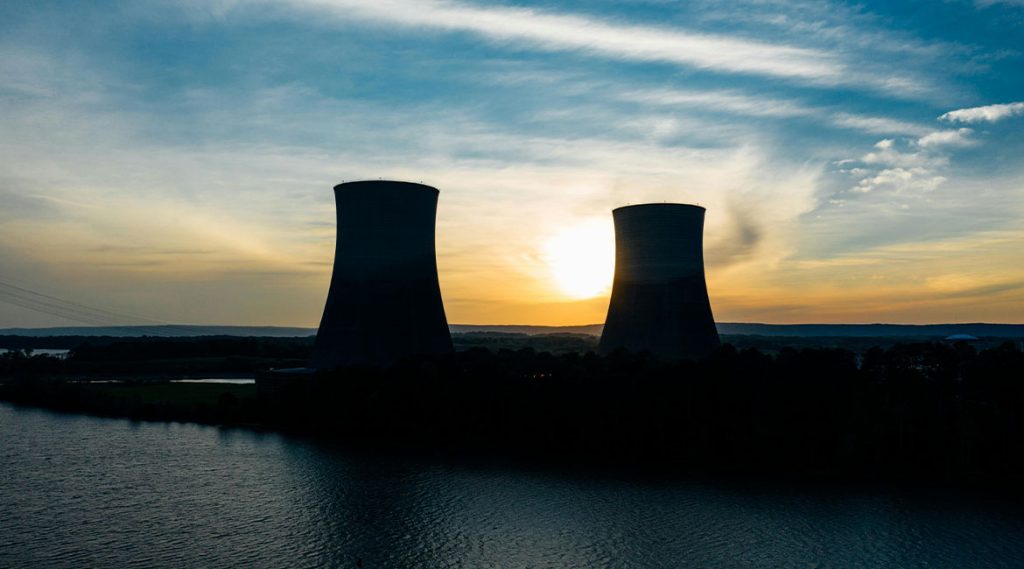
Energy has moved from being a sectoral policy domain to a central instrument of European statecraft, and the EU’s current strategic agenda reflects that shift with unusual clarity. In 2026, the Union’s energy diplomacy is no longer framed only as an external complement to internal market policy; it is increasingly treated as a component of economic security, defence readiness, industrial competitiveness, and geopolitical resilience.
A strategic rather than sectoral file
The most important institutional development is conceptual. The EU Council’s April 2026 conclusions on energy and climate diplomacy explicitly state that advancing the clean transition strengthens sovereignty, competitiveness, and strategic autonomy, while reducing dependence on volatile fossil fuel imports. That language matters because it indicates a broadening of the policy frame: energy is now discussed not merely in terms of supply security or decarbonisation, but in terms of the structural capacity of Europe to absorb external shocks, sustain industrial activity, and retain diplomatic leverage.
This is not a rhetorical adjustment. It reflects a practical recognition that the EU’s exposure to energy disruptions remains embedded in trade balances, price transmission, transport costs, and geopolitical vulnerability. The European Commission’s external energy engagement strategy, updated in the context of the REPowerEU response, continues to stress energy savings, renewables, infrastructure repair, and support for Ukraine as core external priorities. That combination reveals how closely the EU now links energy policy to regional security and to the stabilisation of neighbouring economies.
Security after the gas shock
Recent EU gas market data show that supply patterns have adapted, but not normalised in any simplistic sense. The European Commission reported that EU gas consumption in Q2 2025 was still 2% lower year on year, while imports rose as storage and seasonal patterns adjusted. At the same time, Reuters reported, citing the IEA, that Europe is expected to import a record 185 bcm of LNG in 2026, up from the previous record set in 2025. That combination suggests that Europe has reduced reliance on one supplier, but not its broader dependence on external energy markets. The dependency has become more diversified, more liquid, and arguably more globally exposed.
From a security perspective, this matters because LNG imports are not just a commercial variable. They tie Europe more deeply to shipping routes, global price formation, contractual competition in Asia, infrastructure bottlenecks, and geopolitical disruptions in maritime chokepoints. In other words, the replacement of pipeline vulnerability with LNG flexibility has improved resilience, but it has not eliminated strategic exposure.
The clean transition as resilience policy
The EU’s current messaging is notable for how directly it links decarbonisation to security. The Council’s 2026 conclusions argue that the clean transition reduces dependence on fossil fuel imports and supports economic security, competitiveness, and even defence readiness. This is a more integrated reading than the one that often appeared in earlier climate-policy debates, where decarbonisation and security were sometimes treated as adjacent but distinct agendas.
The European Investment Bank has made a similar argument in more economic language, noting that Europe’s investment in renewables has reduced exposure to global energy shocks and that renewables generated about half of EU electricity in 2024 and 2025. The significance of that statistic is not only environmental. It suggests that domestic generation mix, grid integration, and electrification are now central to the EU’s macro-resilience toolkit. When the marginal price of imported fuels rises sharply, economies with deeper renewable penetration can contain second-round effects more effectively than those with structurally fossil-heavy systems.
That said, a disciplined institutional reading should avoid overstating the case. Europe is not insulated from energy shocks simply because the electricity system has changed. Oil remains deeply embedded in transport, and gas still shapes industrial production, winter heating, and balancing costs. The EIB itself notes that the EU remains exposed to oil prices, particularly through transport, and has become reliant on LNG as Russian gas supplies declined. The clean transition therefore improves resilience, but it does not eliminate external dependence; it redistributes and partially reforms it.

Inflation, growth, and policy trade-offs
The macroeconomic consequences remain material. The IMF has said euro area growth is projected at just 1.1% in 2026, while industrial energy prices in the EU remain roughly double pre-crisis levels. That is a significant institutional assessment because it places energy not at the margin of the growth debate, but near its centre. Energy costs continue to influence industrial margins, capital expenditure decisions, and the relative competitiveness of European manufacturing in global value chains.
The ECB has also highlighted the renewed relevance of energy shocks in its May 2026 remarks, noting that annual headline inflation rose to 3% in April, driven by a 10.9% increase in energy prices. The implication is not that Europe has returned to the inflation regime of 2022, but that the transmission mechanism remains alive and capable of reasserting itself. In this respect, the euro area is better prepared than during the original shock, yet still vulnerable to abrupt energy repricing.
Recent reporting on Germany and Spain reinforces that point. Energy prices have again been an important contributor to above-target inflation readings, with eurozone inflation expected to remain above the ECB’s 2% objective in spring 2026. For policy makers, the challenge is familiar but not identical to 2022: energy inflation is no longer triggering a systemic energy shortage narrative, yet it still complicates the balance between disinflation, growth support, and financial stability. Current institutional assessments suggest that the policy problem is less about panic than about persistence.
Geopolitical risk and Energy security
The EU’s energy diplomacy is also being shaped by developments across a broader range of geopolitical theatres. Recent EU policy documents increasingly emphasize that energy security, strategic autonomy, and economic resilience are influenced by risks originating from multiple regions, supply routes, and critical infrastructure networks.
The strategic relevance of the Middle East is not theoretical. Maritime disruption in the Strait of Hormuz, even if temporary or partial, has the capacity to affect oil and LNG pricing across multiple regions. World Bank and IMF commentary in 2026 has underscored the wider macroeconomic consequences of energy disruptions, including the risk of higher global inflation and weaker growth in vulnerable economies. For the EU, this reinforces the logic of diversification, efficiency, electrification, and external energy partnerships that are not over-concentrated in any single corridor or supplier relationship.
A broader trend identified in institutional analysis is the increasing complexity of energy diplomacy. Energy security is now influenced not only by relationships with exporting countries, but also by shipping routes, infrastructure resilience, critical raw materials, industrial policy, sanctions frameworks, and investment flows. This expands the scope of energy diplomacy beyond traditional supplier-consumer relations.
Neighbourhood policy and strategic interdependence
The regional dimension is especially important. EU energy diplomacy increasingly extends into the Eastern neighbourhood, the Mediterranean, the Western Balkans, and parts of Africa where energy access, infrastructure, and political stability are tightly interwoven. The Commission’s external energy engagement strategy explicitly references support for Ukraine, infrastructure repair, market integration, and a future green hydrogen partnership. This is strategically coherent: neighbouring regions are not only supply partners but also transit spaces, reconstruction arenas, and potential anchors of broader regional resilience.
The policy logic is difficult to separate from security policy. Energy cooperation can stabilise grids, support fiscal adjustment, and improve industrial reliability in partner economies; but it can also create asymmetries if financing, regulation, and infrastructure are not aligned. In the eastern neighbourhood in particular, energy infrastructure has become an object of strategic contestation, as seen in the broader pattern of hybrid pressure and wartime damage. The EU’s response has therefore increasingly combined technical assistance with geopolitical signalling.
In the Mediterranean, the picture is more mixed. The region remains relevant for electricity interconnection, renewable expansion, gas routing, and future hydrogen corridors, yet it also exposes the limits of assuming that energy transition alone resolves regional fragility. The best institutional view is that energy diplomacy can support stability, but cannot substitute for it.
Competitiveness and strategic autonomy
A central feature of the current EU agenda is the growing convergence between energy security and industrial policy. The Council’s 2026 framing explicitly connects the clean transition to competitiveness and strategic autonomy, while the Commission’s work programme points to electrification, heating and cooling, and an energy security package as continuing priorities. That alignment suggests the Union now sees energy as a core determinant of the industrial base rather than as a downstream cost line.
This matters because the EU is competing not only on climate ambition, but on production costs, grid reliability, permitting speed, and access to clean-technology supply chains. Energy-intensive sectors remain sensitive to relative power prices, and the divergence between Europe and other major economic blocs continues to shape investment decisions. The IMF’s observation that EU industrial energy prices remain roughly double pre-crisis levels is therefore strategically relevant, not just economically notable.
At the same time, strategic autonomy should not be confused with autarky. The EU’s own documents emphasise partnerships, fair competition for resources, and international cooperation, not closure. That is the correct institutional framing. Europe’s objective is not to detach from global energy systems, but to reduce the vulnerability created by unilateral dependence and price-taking in moments of crisis.
Institutional discipline and the limits of narrative
A serious reading of the EU’s energy diplomacy must preserve a degree of analytical restraint. It would be too simplistic to describe the current agenda as a linear success story. Europe has improved resilience, accelerated renewables deployment, and diversified supply. But it has also substituted one form of external dependence for another, while absorbing higher system costs in the transition phase.
It would also be too simplistic to frame the current environment as a pure security deterioration. The institutional evidence points instead to adaptation under pressure. The EU has become more explicit about the strategic role of energy, more willing to integrate climate and security language, and more aware that infrastructure, market design, and external engagement must be coordinated. That is a material institutional evolution, even if it remains uneven across member states and policy layers.
A balanced interpretation is that the EU is undergoing a gradual process of strategic adaptation. Policy developments since 2022 indicate stronger coordination between energy, climate, industrial, and security objectives, although implementation remains uneven across member states and policy domains.
Concluding perspective
The strategic significance of energy diplomacy in 2026 lies in its breadth. It now connects external relations, regional security, industrial competitiveness, climate commitments, and macroeconomic stability in a single policy architecture. The EU’s challenge is not simply to secure molecules or megawatts, but to preserve political and economic optionality in a world where energy markets, alliance structures, and regional conflicts remain tightly interdependent.
That broader agenda is likely to remain central because the underlying conditions have not reverted to the pre-2022 environment. Europe has improved resilience, but the global energy system remains exposed to shocks, inflation remains sensitive to energy repricing, and neighbouring regions continue to matter for security as much as for supply. The result is a more strategic Europe, but also a more demanding one.
Author
About Post Author
