
The International Energy Agency’s Executive Director, Fatih Birol, has framed the present disruption as more than a cyclical shock: in his assessment, global energy markets are unlikely to return to their pre-war conditions in 2027. Speaking at Singapore International Energy Week and in subsequent remarks, he argued that geopolitical disruption—particularly the conflict involving Iran and the effective closure of the Strait of Hormuz—has altered consumption patterns, trade routes, investment incentives and the political economy of energy security.
The central proposition is not that hydrocarbons are disappearing. Oil, natural gas and LNG remain integral to the global system. Rather, the proposition is that the terms on which they are produced, transported, priced and politically secured have changed. Energy markets are moving from an optimization model, in which efficiency and cost minimization dominated, toward a resilience model, in which predictability, redundancy and strategic autonomy carry greater weight.
From efficiency to resilience
The most consequential shift is conceptual. For much of the modern era, energy policy and corporate planning treated security as a constraint to be managed within an otherwise efficient global system. The IEA now describes importers as shifting from a “just-in-time” to a “just-in-case” framework, with price increasingly weighed against predictability of supply.
This is not merely rhetorical. The Agency’s 2026 World Energy Investment report projects global energy investment of $3.4 trillion, with approximately $2.2 trillion directed toward grids, storage, low-emissions fuels, nuclear, renewables, efficiency and electrification, and roughly $1.2 trillion toward oil, gas and coal. Electricity-related investment is expected to reach nearly $1.6 trillion, rising to $2 trillion when end-use electrification is included.
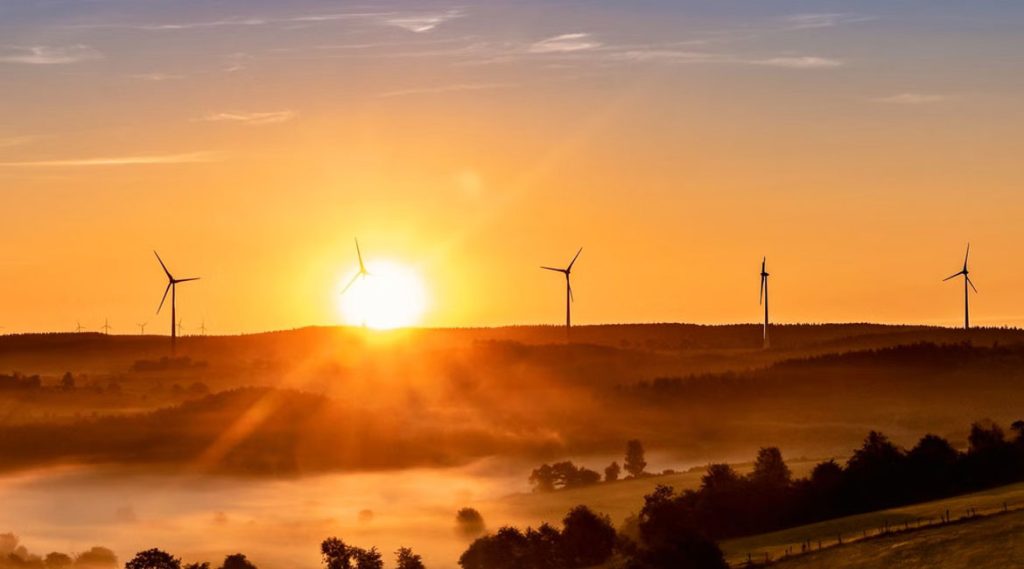
The pattern suggests that governments and firms are not choosing between security and transition; they are pursuing both, often for overlapping reasons. Renewables, nuclear, grids, storage and electrification reduce exposure to imported fuels and vulnerable maritime corridors. At the same time, domestic hydrocarbons, coal in certain markets, new pipelines and LNG infrastructure are being deployed as instruments of supply resilience.
In my experience, the most durable changes in energy systems rarely begin with a consensus on the destination; they begin when the cost of the previous operating model becomes politically unsustainable. The present period appears to fit that pattern.
Geopolitics as a market structure
Birol’s observation that geopolitics now casts a “dark and long shadow” over the energy sector captures an important change in market structure. Energy security is no longer an ancillary policy objective; it has become a primary determinant of investment, procurement, trade policy and industrial strategy.
The immediate trigger is severe. The conflict has disrupted a market that had been expected to record a surplus in 2026, lifting crude benchmarks toward $120 per barrel and pushing refined-product prices higher still. Birol has emphasized that crude prices alone understate the stress: economies consume refined products, and diesel, gasoil and LNG have experienced sharper increases from pre-war levels.
The implications extend beyond energy balances. Higher fuel prices affect trade deficits, inflation pass-through, fiscal positions, agricultural costs and industrial competitiveness—particularly in import-dependent emerging economies. The IEA has also warned that elevated financing costs and short-term volatility can disproportionately affect capital-intensive energy technologies in developing economies, where the cost of capital is already materially higher than in advanced economies.
A recurring lesson from previous supply shocks is that the economic damage is rarely distributed according to exposure to the initial disruption; it is distributed according to the quality of buffers, institutions and policy credibility.
Electricity becomes the strategic centre
The second structural change is the rising centrality of electricity. Birol has described the coming period as the “age of electricity,” while stressing that oil and natural gas, including LNG, will continue to play substantial roles. The IEA reports that global electricity demand is growing roughly two and a half times faster than total energy consumption, driven by electrification, data centres, air conditioning, industrial demand and electric mobility.
This changes the nature of energy security. The strategic question is no longer confined to the availability of barrels or cubic metres; it increasingly concerns grid capacity, interconnection, storage, dispatchable generation, critical minerals, cyber resilience and the industrial capacity to manufacture clean-energy technologies at scale.
Southeast Asia illustrates the point. Birol has noted that electricity demand across ASEAN is rising at nearly twice the rate of overall energy consumption, reflecting industrial electrification, cooling demand, electric vehicles and data-centre growth. Yet he has also flagged the concentration of clean-energy supply chains in a small number of countries as an emerging vulnerability. The security problem has therefore migrated upstream: from fuel supply to technology, components, capital goods and manufacturing capacity.
The energy transition is often discussed as a substitution story, but its more demanding dimension is industrial: who can build, finance, maintain and secure the physical infrastructure of an electrified economy.
Diversification without simplicity
Diversification remains the first-order response, but its meaning has become more complex. Birol has repeatedly described it as the “golden rule” of energy security, encompassing alternative suppliers, routes, fuels and domestic resources. In practice, however, diversification now involves trade-offs that cannot be resolved by a single technology or policy instrument.
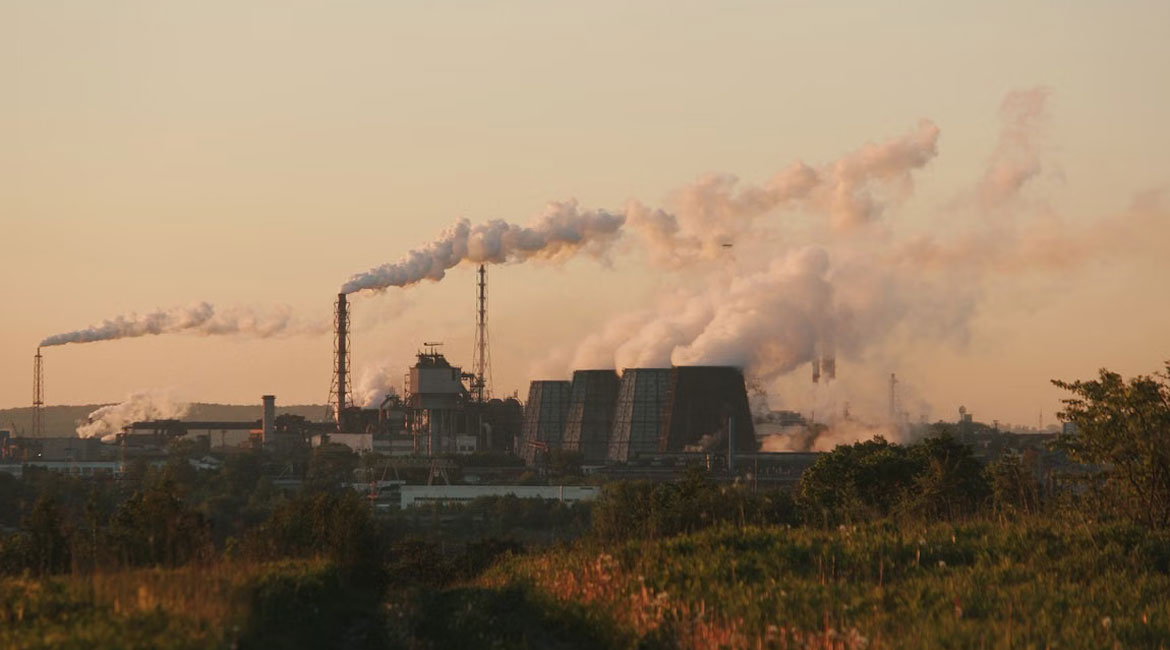
Renewables reduce fuel-import exposure but introduce dependence on equipment supply chains, grid flexibility and storage. Nuclear offers low-carbon dispatchable generation but requires long lead times, regulatory capacity and substantial capital. LNG provides flexibility but ties buyers to global shipping lanes, liquefaction capacity and increasingly contested gas markets. Coal may offer short-term security in some power systems, but it can deepen carbon, air-quality and transition-risk exposures.
The nuclear revival is one of the clearest signals of this recalibration. Birol has cited IEA survey data indicating that around 90 gigawatts of nuclear capacity is under construction worldwide, the highest level in four decades. Whether this translates into timely deployment will depend less on announcements than on financing structures, licensing regimes, supply chains and public acceptance.
The distributional question
The reordering of energy markets will not affect all economies equally. Advanced economies with diversified supply, deep capital markets and established grid infrastructure possess greater capacity to absorb higher costs and accelerate structural adjustment. Many emerging and developing economies face a more constrained set of choices: higher import bills, tighter external financing, weaker fiscal space and greater sensitivity to food and transport inflation.
This creates a potential tension at the heart of international climate and development policy. Energy security may accelerate clean-energy deployment in markets where domestic resources, manufacturing capacity and grid investment are available. Elsewhere, it may delay transition decisions if governments prioritize immediate affordability and fuel availability over longer-term decarbonization.
The IEA’s own reporting reflects this ambivalence: the crisis has supported renewables, electric vehicles and nuclear momentum, while also encouraging greater coal use in parts of Asia as higher LNG prices alter power-sector economics. The outcome is therefore unlikely to be a uniform global transition; it is more likely to be a differentiated, politically negotiated process shaped by national endowments and institutional capacity.
A changed baseline
Birol’s warning that markets may not normalize in 2027 should be read less as a price forecast than as a statement about the durability of structural change. The crisis has exposed the fragility of concentrated trade routes, the strategic value of refined-product capacity, the importance of electricity infrastructure and the political cost of excessive dependence on a small number of suppliers or corridors.
It is reasonable to observe that the global energy system is entering a period in which resilience, redundancy and strategic autonomy will command a premium. That does not imply the end of globalization in energy, nor does it imply a rapid retreat from hydrocarbons. It implies a more fragmented, more politically managed and more capital-intensive system, in which the location of infrastructure, the diversity of suppliers and the security of electricity systems matter as much as marginal cost.
The institutions that navigate this period most effectively will be those able to hold two truths simultaneously: energy security is now inseparable from geopolitical strategy, and long-term decarbonization remains inseparable from industrial capability. The challenge for policymakers, corporates and international institutions is to design systems that can withstand shocks without abandoning the longer-term objective of a more sustainable and broadly accessible energy economy.
Author
About Post Author
